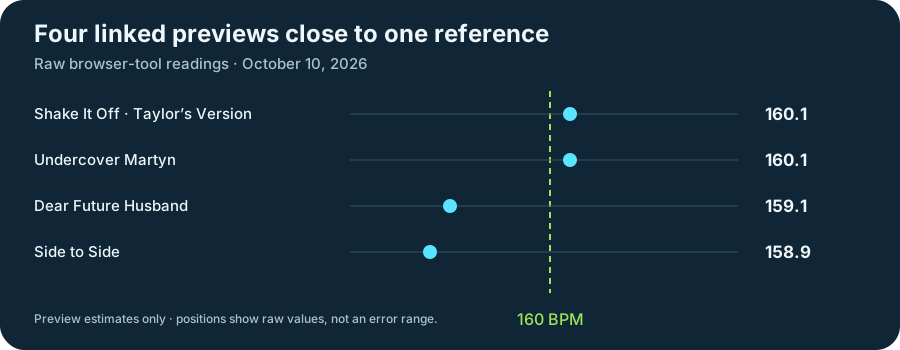
These four linked recording previews produced readings from 158.9 to 160.1 BPM in our browser BPM Finder. We analyzed the available 30-second preview files on October 10, 2026. “Near 160” describes these excerpt readings only; it does not certify the complete recordings or decide which pulse level you should count.
Unrounded browser-local readings · each row identifies the tested recording
The BPM column preserves the site's displayed readings. The difference column is subtraction from the 160 BPM reference, not another audio measurement. Download the four-row measurement record.
Use the reading as a listening starting point
At a nominal 160 beats per minute, one beat interval is 60 ÷ 160 = 0.375 seconds, assuming you are counting quarter-note beats. That calculation describes the reference pulse, not a claim that every musical accent in a recording lands at that interval. Tap along to the same pulse level you intend to use; a drum subdivision or a broader accented beat can make two listeners describe the same passage differently.
The four readings cluster close to the reference, but the page deliberately keeps tenths visible. For example, the measured “Side to Side” preview returned 158.9 rather than being rounded up to 160. That difference is small in this shortlist, yet it remains part of the record so a reader can choose a version to audition rather than mistake a search label for a certified tempo.
Original comparison of four measured preview readings against the 160 BPM reference.
A result belongs to a version and an excerpt
Each link points to the catalog version named in its row. “Shake It Off” here is the Taylor’s Version listing on 1989 (Taylor’s Version); the measurement should not be silently transferred to another release, live performance, or edit. The same rule applies to the album editions named for the other tracks.
The browser tool analyzed the full preview file available for each linked record. Its visible duration was 0:30. Deezer does not state the preview's start position within the full recording in the source record we used, so these measurements cannot identify a full-song timestamp or show whether another section keeps the same pulse.
What the list can and cannot tell you
The table answers a narrow question: which tested preview files made the local analyzer report a value close to 160 BPM? It is not a complete catalog, a recommendation ranking, or a claim that every listener will tap the same beat. No tested result establishes an error margin, a stable tempo across an entire recording, or the intended level of the beat.
If you are matching a workout or practice interval, listen to the linked version and tap the pulse you want to follow. When your tap lands near half or twice the analyzer's result, check whether you are counting a slower accent or a faster subdivision before changing the tempo. You can compare manual taps with the online tempo tapper or load a file you already have into the local BPM Finder.
Questions about the 160 BPM list
Are these complete songs verified at exactly 160 BPM?
No. The displayed values are measurements of linked 30-second preview files. The raw readings range from 158.9 to 160.1 BPM; none is rounded to make it equal 160.
Why does the table show a difference from 160?
It is simple subtraction from the page's reference value: the raw display minus 160. It helps compare the listed previews but does not add precision to the analyzer.
Can a different release or section return another number?
Yes. The measurement is tied to the exact catalog version and preview file shown in each row. We did not test every section of the full recording, and the preview start positions are not stated.
Does the BPM Finder upload my recording?
No. Audio selected in the BPM Finder is decoded and analyzed in your browser, and the selected file is not sent to our servers. This song list links to source catalog records; it does not host the audio or lyrics.
Sources and measurement conditions
On October 10, 2026, each linked Deezer preview file was selected through Chrome in the live Tap BPM Now BPM Finder. The tool displayed “Analysis complete” for each file and showed a 0:30 stereo duration. The four raw values in this page are copied from that tool display. The preview files stayed on the device during analysis; no audio or lyrics are hosted here.
The source listings identify the tested recording versions. The preview start positions, full-track stability, intended beat level, and analyzer error margin are not stated. The CSV preserves each source URL, measured display, date, method, and these limits.